Choosing The Right Bathroom Drywall Type
Standard drywall has no business in a wet bathroom. Your options start with moisture-resistant drywall types, each built to handle different exposure levels.
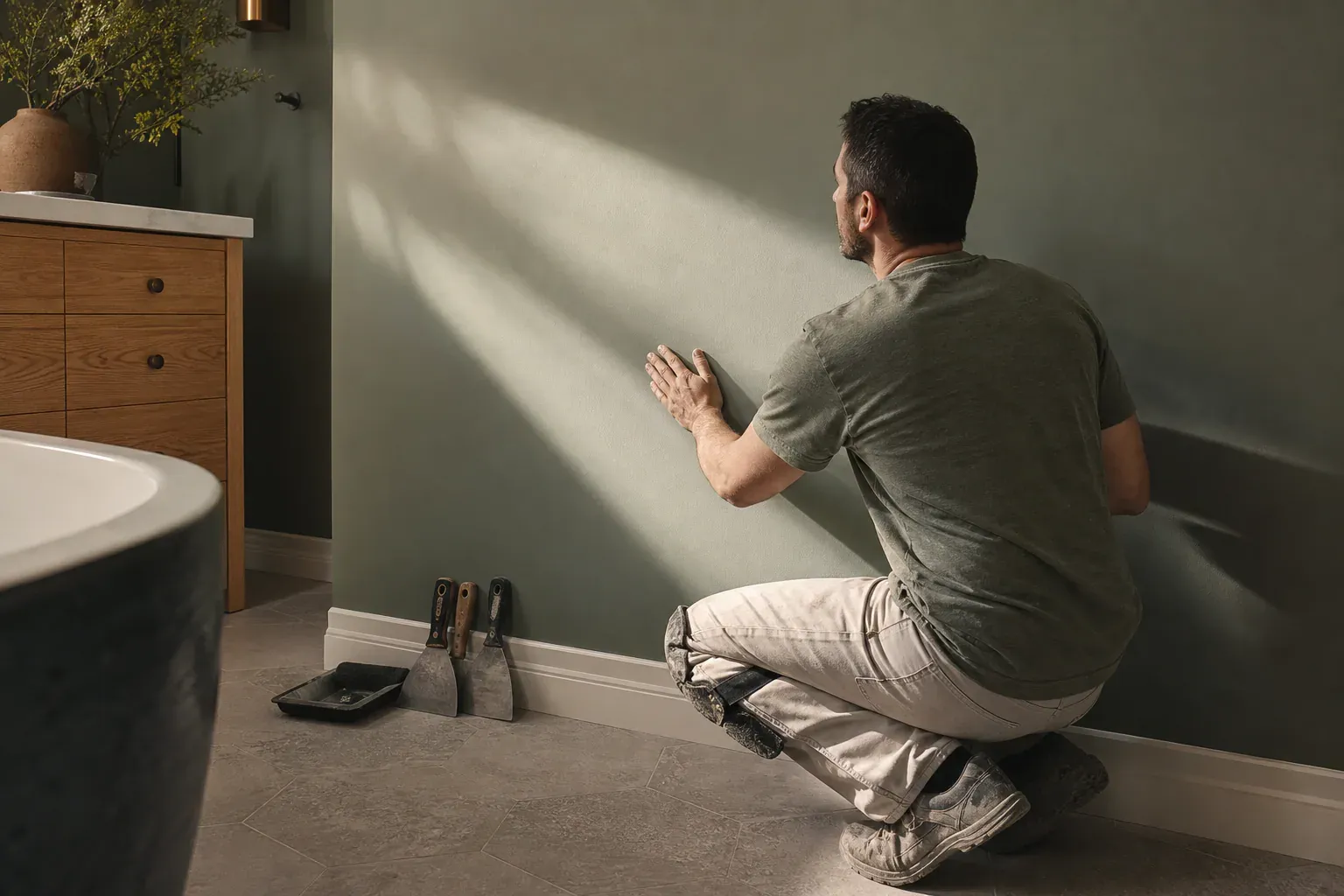
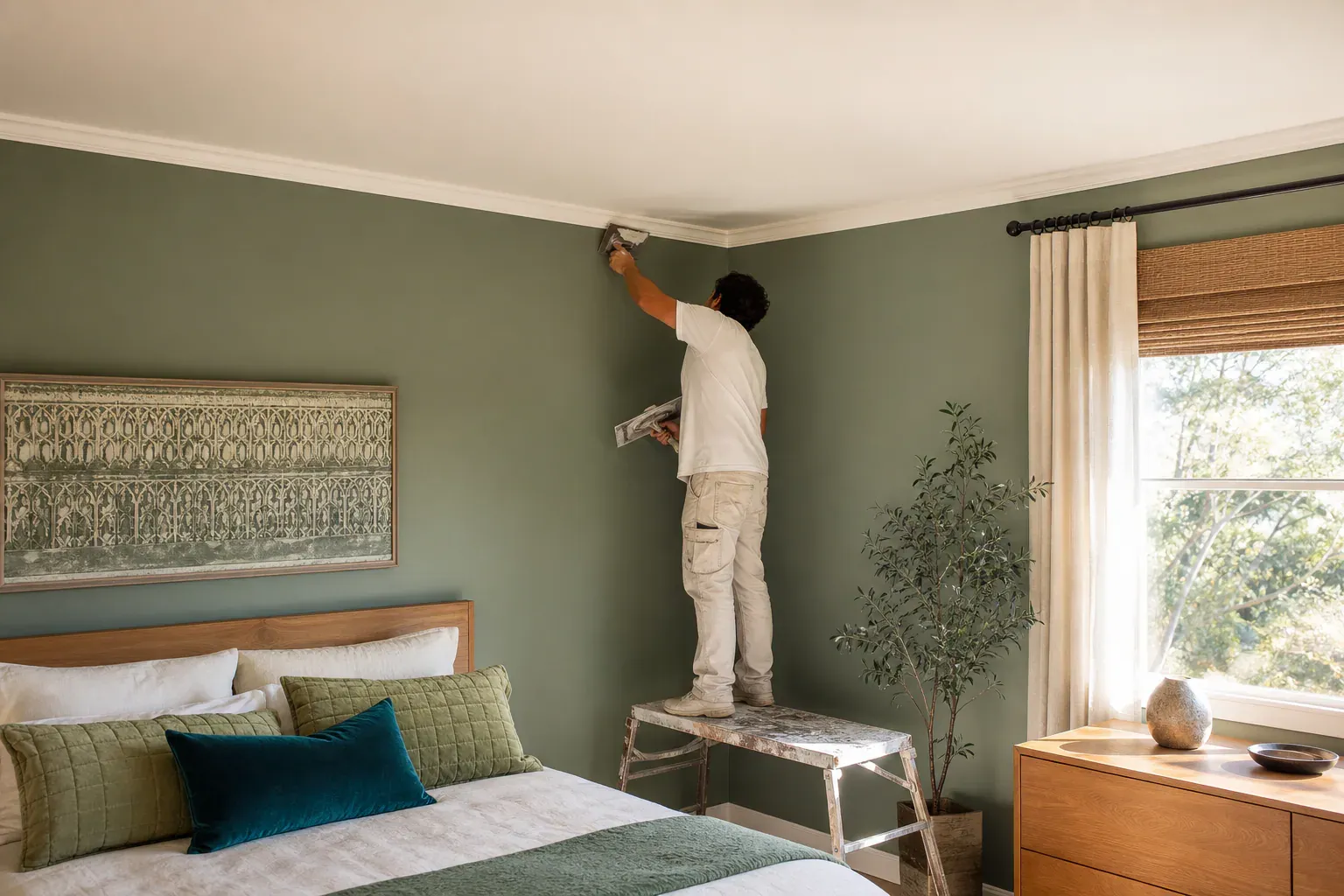
Glendale Quality Drywall installs, finishes and repairs moisture-resistant drywall in bathrooms across Glendale, CA, protecting framing from humidity damage that can sag ceilings and grow mold within years. Bathrooms are the hardest rooms to drywall because trapped humidity attacks gypsum cores and paper facings. The right material choice, installation method, and ventilation setup determine whether a bathroom ceiling lasts or fails.
Standard drywall has no business in a wet bathroom. Your options start with moisture-resistant drywall types, each built to handle different exposure levels.
Blue board is a veneer plaster base designed for plaster application, not paint or direct tiling. It has non-absorbent paper facing but the plaster finish itself absorbs moisture at seams and edges. Bathrooms rarely use blue board because of this finish vulnerability.
Paperless drywall with fiberglass mesh facing offers the strongest water resistance. The mesh does not absorb, and the gypsum core can be formulated for high-humidity areas. Paperless drywall costs more but eliminates mold risk at paper seams—a real concern in bathrooms where tape seams stay damp for weeks.
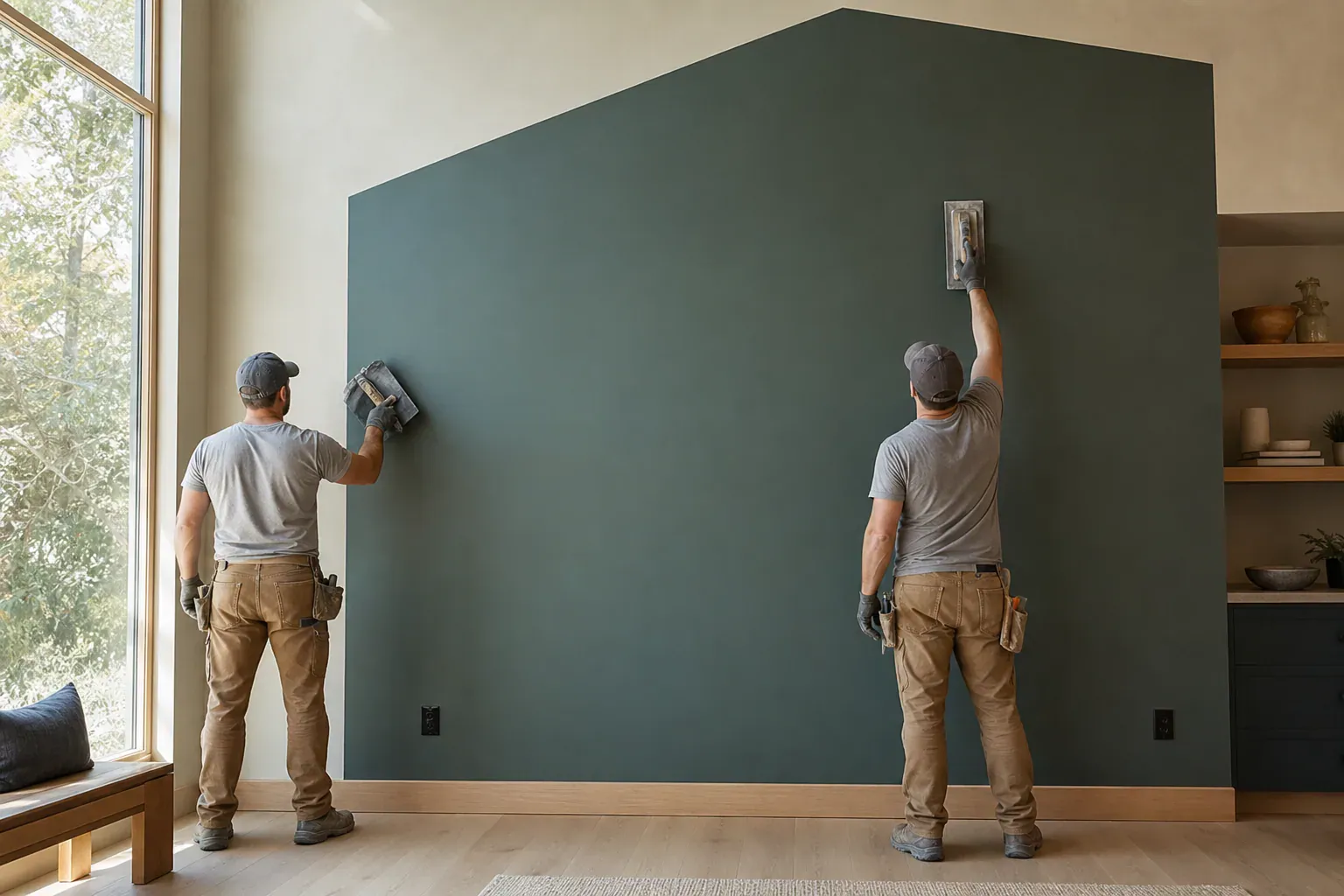
Behind shower tile, no paper-faced drywall belongs, even purple board. Cement board or fiberglass mesh-faced gypsum panels with water-resistant coating are required as the tile substrate in the shower stall itself. Cement board is rigid, non-absorbent, and accepts fasteners and tile adhesive reliably. Fiberglass mesh-faced panels resist standing water where cement board can wick moisture at cut edges if left exposed.
Behind moisture-resistant drywall in tub and shower surrounds, install a moisture barrier. A 6-mil polyethylene sheet stapled to the studs before panels go up stops vapor from rising through the wall cavity. Water-resistant coating brushed onto the stud face before barrier installation adds a second layer of defense.
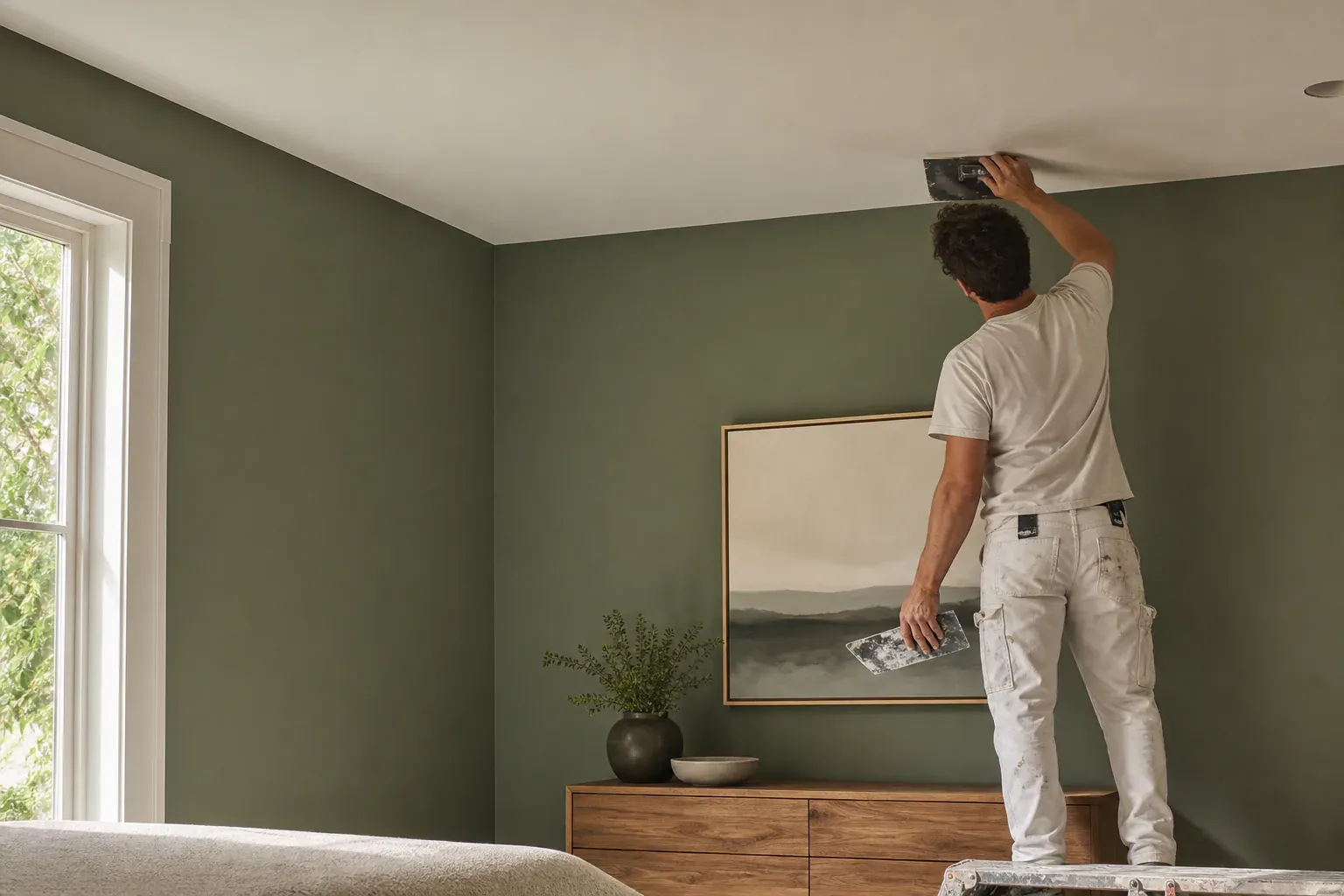
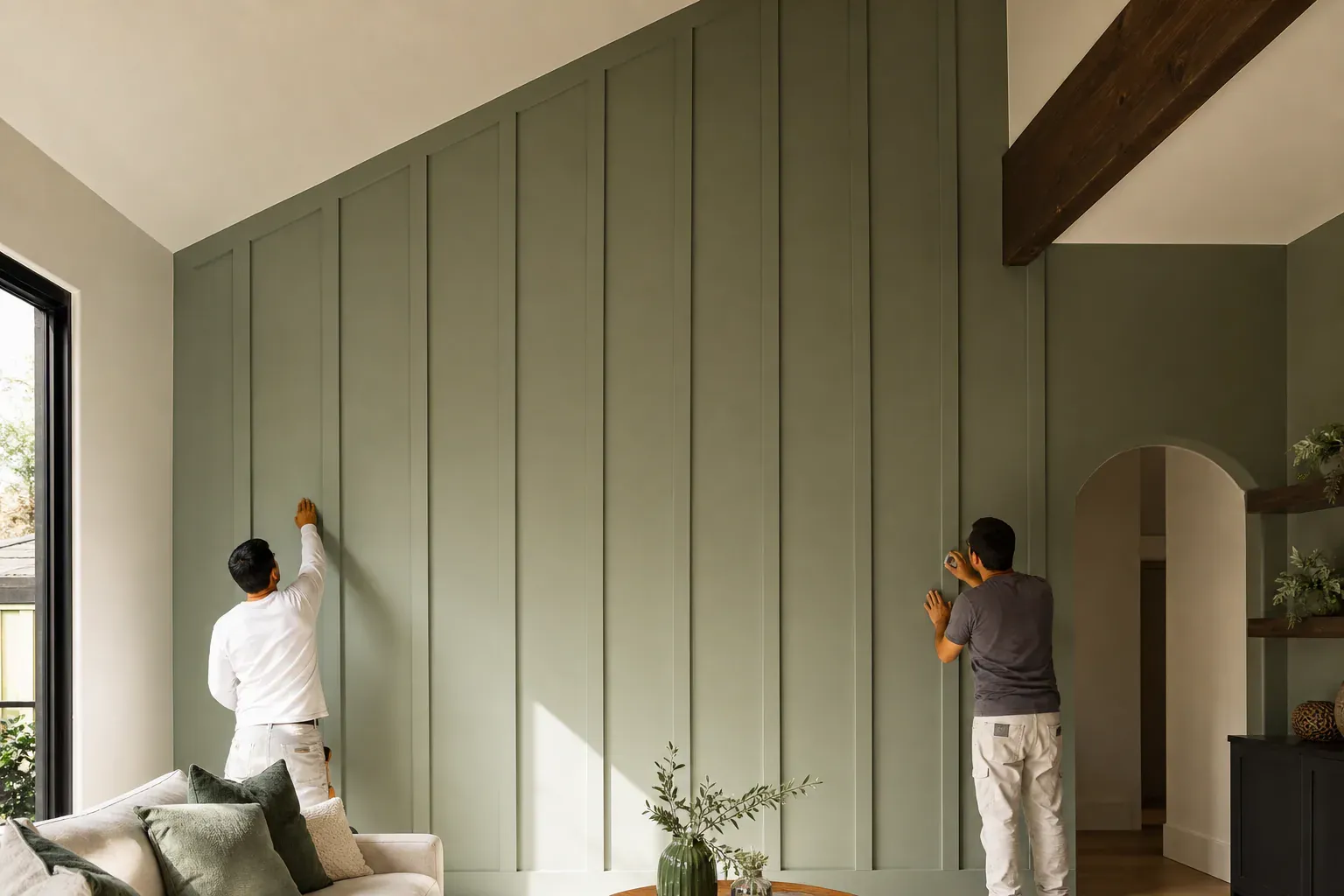
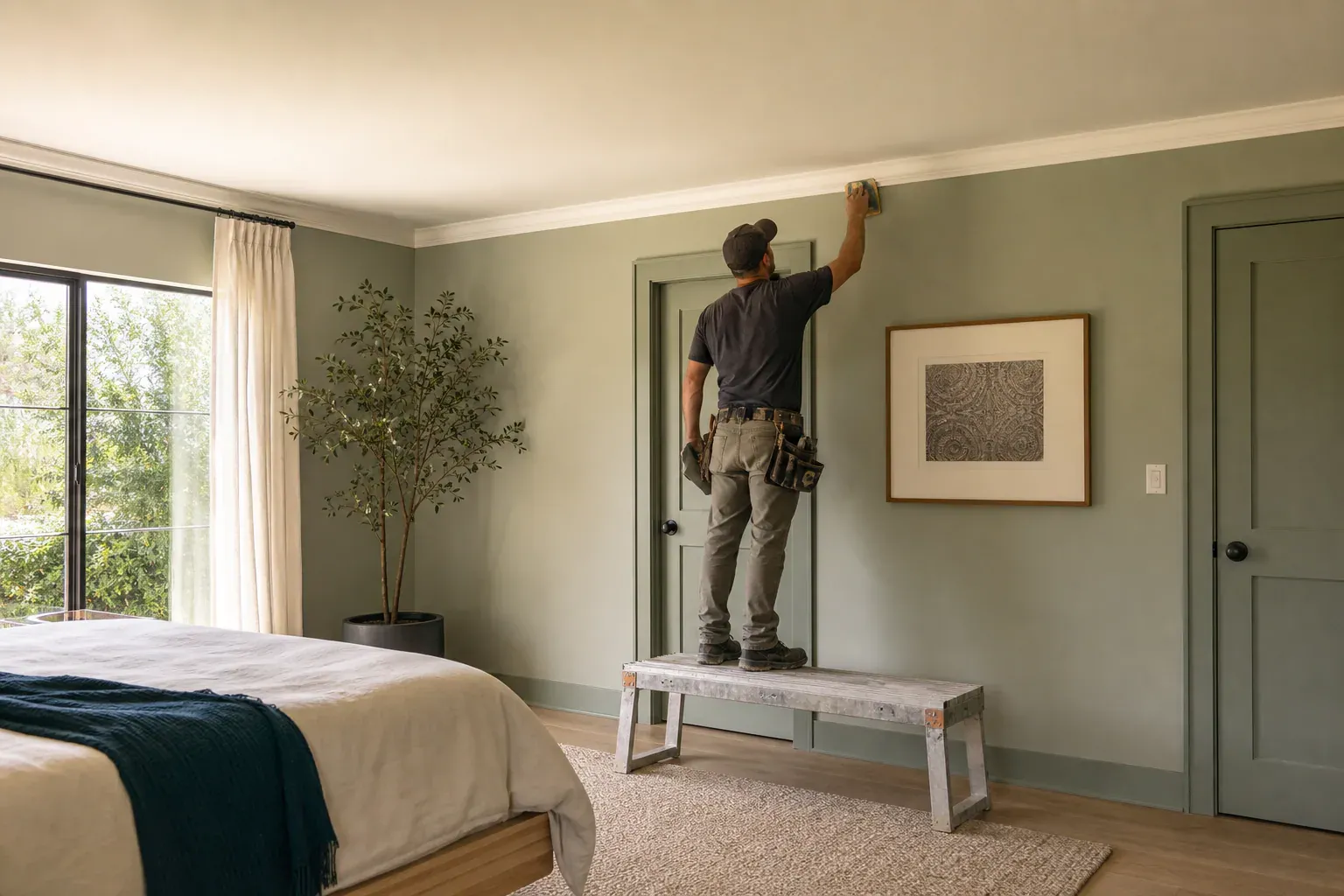
Panels are hung horizontally to minimize tape seams. Fasteners—nails or screws—are spaced 8 inches on center on ceilings and 12 inches on walls. A 1/2-inch gap is left at the tub rim or shower curb to allow for expansion. Fasteners are driven so the head sits just below the surface, leaving a dimple for joint compound to fill.
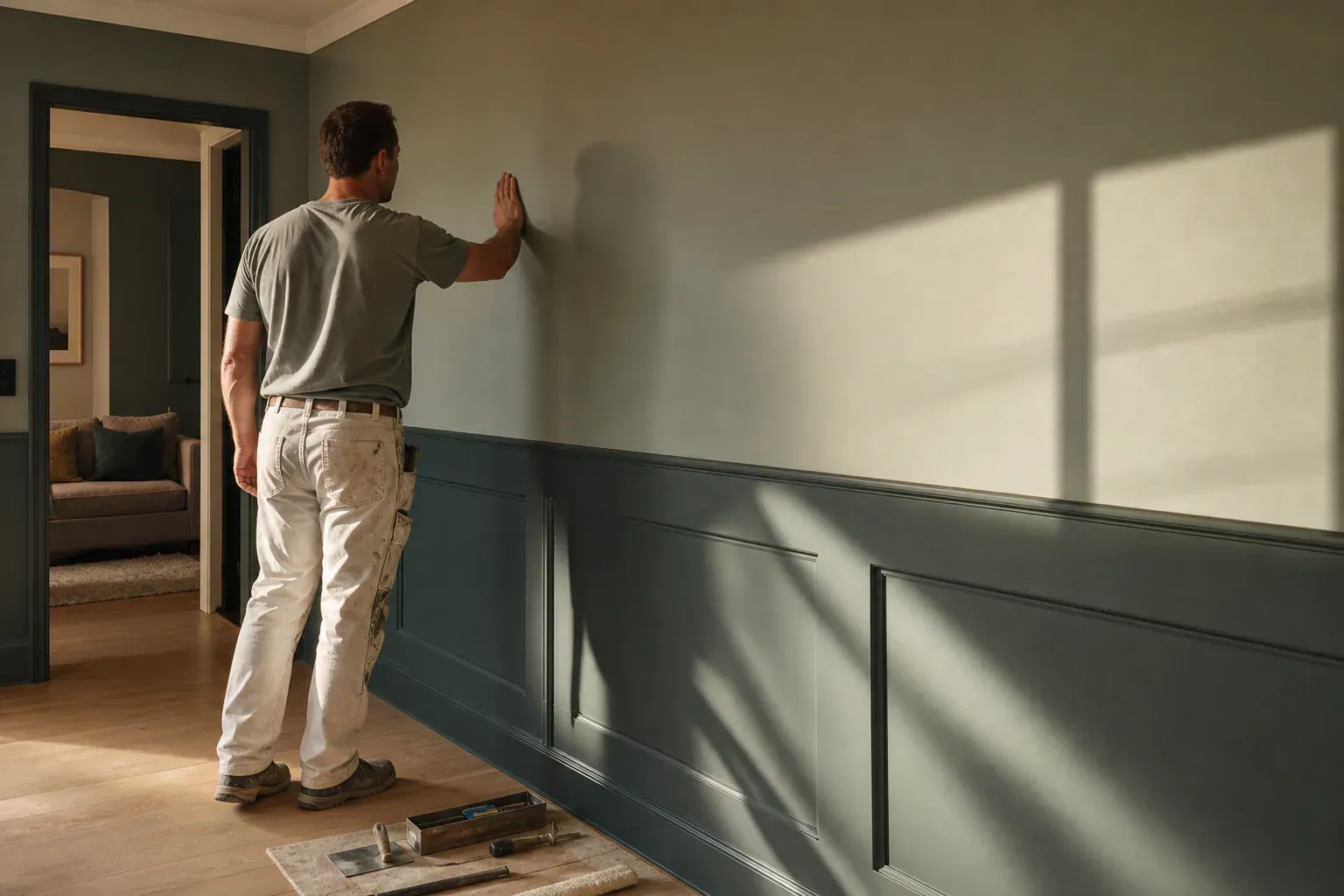
Water damage shows as soft spots, brown staining, and visible sag between studs. If damage is under roughly a 2-foot section, a localized cut-out and patch works. Cut out the damaged area, install new backing if the studs are wet, patch with moisture-resistant drywall, and tape the seams.
Larger damage or recurring moisture problems mean full panel replacement is the only fix. Patching over saturated gypsum core delays failure, not prevents it. Mold grows in damp gypsum, spreads into the cavity, and the patch will fail again in months.
A level 5 finish—a skim coat of joint compound over the entire ceiling—is recommended for bathroom ceilings under strong lighting. It hides texture flashing and seam shadows caused by humidity-driven gypsum movement.
Type X drywall is required on garage-adjacent bathroom walls and multi-family shared bathroom walls by building code. The Type X gypsum core contains fiberglass fibers that delay fire spread, earning a one-hour fire rating. 5/8-inch Type X is the standard thickness for this purpose.
Bathroom drywall takes a lot of abuse. Beyond water damage, you get drywall cracks from settling, humidity cycling, and vibration from exhaust fans. Small cracks usually start at the corners of framing or along seams where two pieces meet. A hairline crack that stays hairline is just a cosmetic fix—sand, mud, feather it out, prime, paint. A crack that opens and closes with the seasons or spreads past an inch means you have a structural or moisture problem underneath; we find and fix that first, then repair the drywall.
Drywall hole repair depends on the size. Nail pops and small punctures get spackle and a sand-smooth finish. Holes bigger than a few inches need a patch—we cut a square or rectangle around the damage, screw in a backing board, tape the seams, mud it level, and finish it so you can't see the repair once it's painted. In high-moisture bathrooms, we use moisture-resistant compound and paper tape, not paper tape and joint compound that absorb water and fail.
Greenboard drywall installation is one of your first choices if you're framing a new bathroom wall or replacing sections. Greenboard has a moisture-resistant paper facing and a core treated to resist mold; it handles humid air better than standard drywall. We use it in the splash zone around tubs and showers and often behind shower panels where spray gets driven sideways. It costs more than standard board but lasts much longer when moisture is a factor.
Purple board drywall benefits go beyond moisture resistance. Purple board (also called DensArmor Plus or similar branded products) has no paper facing at all—it uses fiberglass mat, which means mold cannot feed on it the way it feeds on paper. It's harder to puncture, more impact-resistant, and bonds well with tile adhesive if you're tiling over drywall. We install purple board in high-traffic bathroom areas and where you expect heavy splashing.
Bathroom drywall sagging prevention starts with material choice and fastening. We space fasteners closer on ceilings in humid rooms, use screws instead of nails (they hold better over time), and install ventilation that actually vents outside—not just into an attic. If a ceiling is already sagging, we may remove the damaged section, let the framing dry completely, and install new moisture-resistant board with reinforced fastening.
Drywall patching and mudding is both an art and a durability question in bathrooms. A repair is only as good as the primer and paint that follow it. We use primers rated for moisture-prone areas and topcoats with mildew resistance. A patch that isn't sealed properly will swell again when humidity returns.
Popcorn ceiling removal is common in older Glendale bathrooms. Popcorn collects moisture, traps mold, and sheds texture into your shower. We remove it carefully (checking for asbestos risk first if the home is old enough), seal the underlying drywall or plaster, repair any damage we find, and finish with smooth drywall or a moisture-resistant spray texture. The bathroom feels bigger and cleaner, and you lose the mold trap.
Standard drywall has no business in a wet bathroom. Your options start with moisture-resistant drywall types, each built to handle different exposure levels.
Behind shower tile, no paper-faced drywall belongs, even purple board. Cement board or fiberglass mesh-faced gypsum panels with water-resistant coating are required as the tile substrate in…
Behind moisture-resistant drywall in tub and shower surrounds, install a moisture barrier. A 6-mil polyethylene sheet stapled to the studs before panels go up stops vapor from rising…
Panels are hung horizontally to minimize tape seams. Fasteners—nails or screws—are spaced 8 inches on center on ceilings and 12 inches on walls.
Water damage shows as soft spots, brown staining, and visible sag between studs. If damage is under roughly a 2-foot section, a localized cut-out and patch works.
A level 5 finish—a skim coat of joint compound over the entire ceiling—is recommended for bathroom ceilings under strong lighting.
Why homeowners call us
Every drywall job is scoped and priced in writing, so the number you approve is the number you pay. If something behind the wall changes the work, we stop and price it first.
You speak to the people doing the work, not a call centre, and cover certificates go to your building manager or general contractor on request.
Containment, floor protection and same-day debris removal on every interior job — the space stays usable while the work is going on.
Crews work Glendale and the surrounding cities every week, so a walkthrough is usually available within the same week you call.
FAQ
Use moisture-resistant drywall throughout the bathroom: purple board on ceilings and walls near tubs and showers, green board on walls with indirect splash. Install cement board or fiberglass mesh-faced panels with water-resistant coating directly behind shower tile. Back all surfaces with a 6-mil moisture barrier on studs, especially in high-humidity areas.
Purple board is better for ceilings and tub surrounds because the mildew-resistant gypsum core and mold-resistant paper resist sustained condensation in those zones. Green board suits walls with indirect splash. Both are moisture-resistant, but purple's core treatment makes it more durable under heavy moisture exposure.
No. Standard drywall paper and gypsum core absorb water and mold grows within weeks in high-humidity areas. Building codes prohibit standard drywall in bathrooms. Moisture-resistant drywall is a code requirement, not an upgrade.
Cement board or fiberglass mesh-faced gypsum panels with water-resistant coating must back shower tile. These materials do not absorb water and will not wick moisture at cut edges. Seal all cut edges with water-resistant coating before tile is set. Moisture-resistant drywall alone is not acceptable as the tile substrate.
Yes. A 6-mil polyethylene moisture barrier stapled to studs before panels are hung stops vapor rise through the wall cavity. Add water-resistant coating on the stud face before barrier installation for extra protection in tub and shower surrounds. Ventilation and moisture barrier work together to prevent saturation.
Use 5/8-inch Type X drywall on ceilings instead of 1/2-inch, which adds sag resistance and fire rating. Install a properly sized bathroom ventilation fan and run it 20 minutes post-shower to pull humidity out before it saturates the gypsum core. Moisture-resistant drywall and a moisture barrier slow absorption, but ventilation is the primary defense against sagging.
Call (213) 555-0110 for a walkthrough, usually within the same week.