Small Hole and Nail Damage Repair
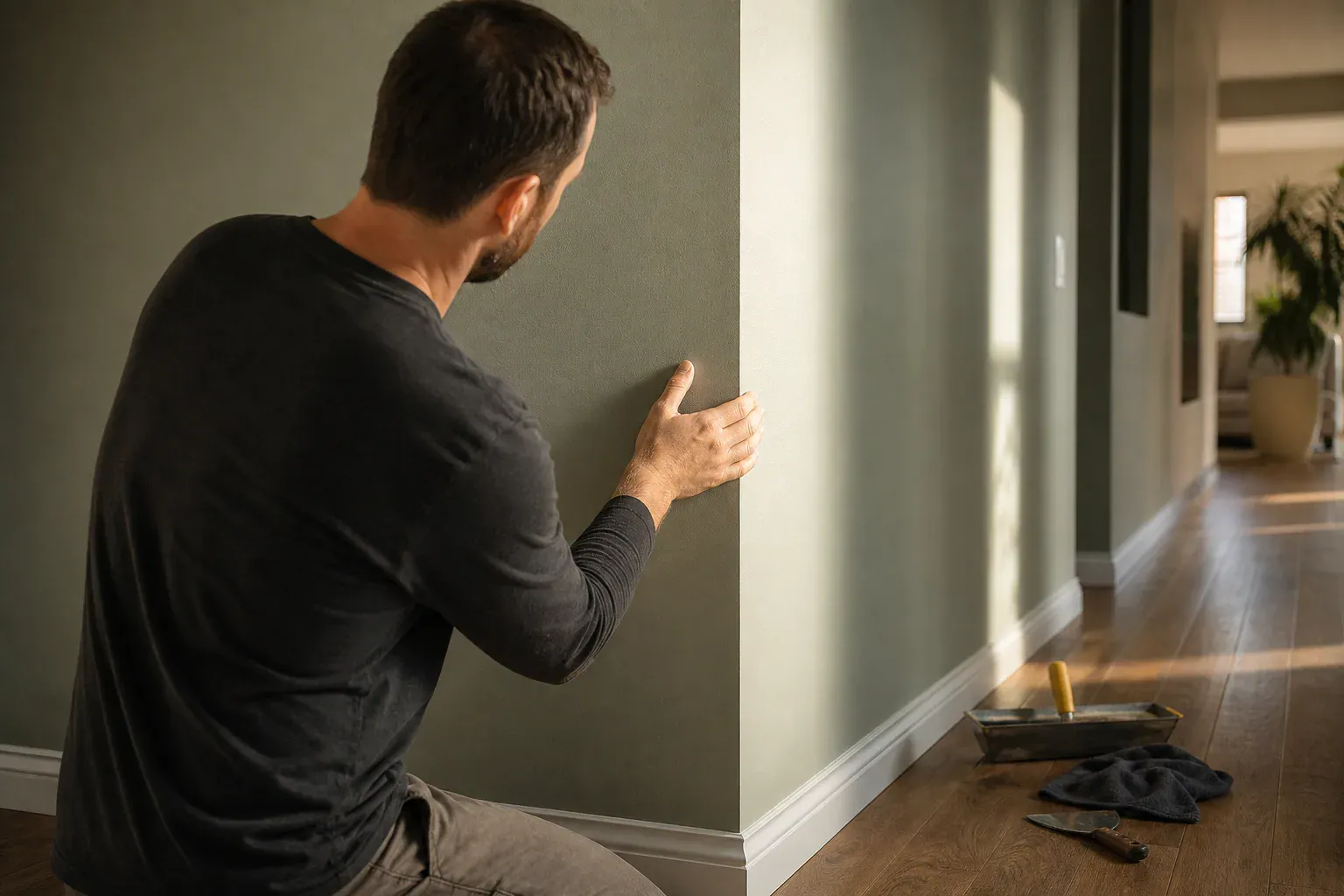
Nail pops and anchor holes are the most frequent repairs we see. A nail pop happens when fasteners back out as framing wood dries, pushing a small bulge through the drywall finish.
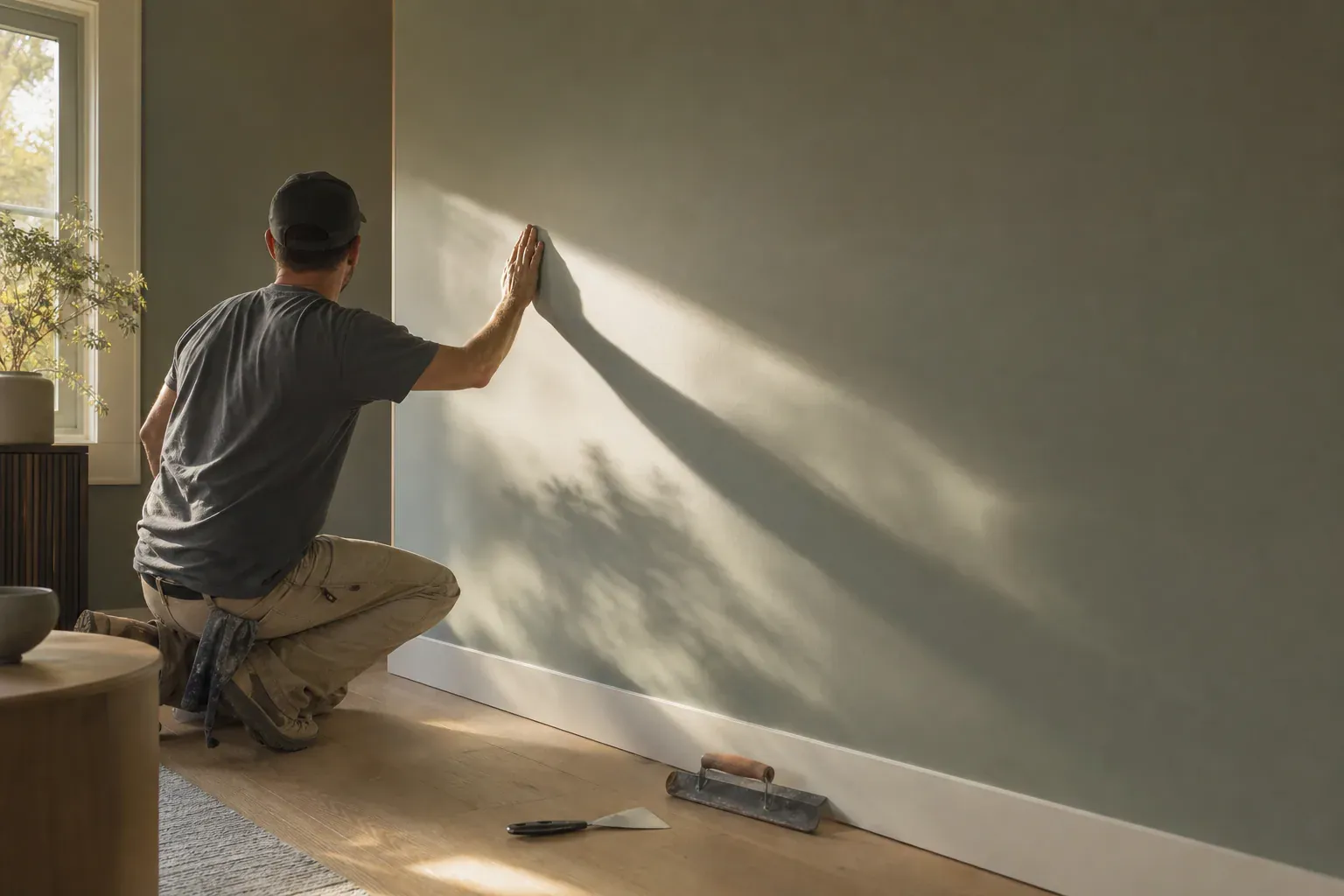
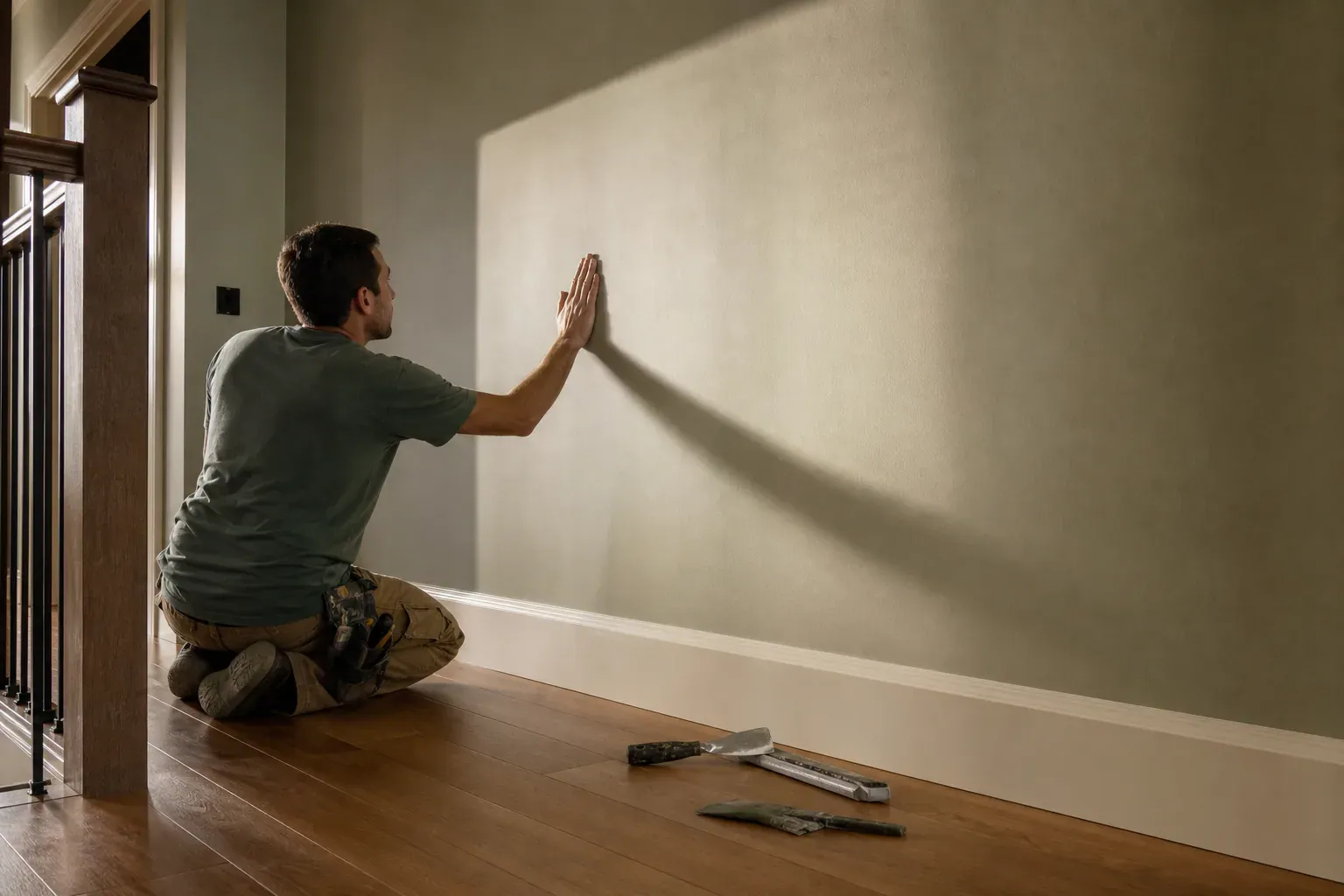
Glendale Quality Drywall handles drywall santa monica ca for homeowners and property managers in Santa Monica, CA. Glendale Quality Drywall provides drywall repair, installation, and interior wall finishing across Santa Monica, CA and the surrounding areas. We handle everything from patching nail holes and sealing cracks to full wall installations, ceiling repair, and texture matching on older homes and newer construction alike.
Santa Monica's housing stock skews older—many properties contain original plaster walls, lath-and-plaster transitions, and drywall installed over legacy surfaces. That complexity means repair work here is rarely just spackling and sanding. We patch holes the right way, match finishes accurately, and address the root cause so damage doesn't return.
Nail pops and anchor holes are the most frequent repairs we see. A nail pop happens when fasteners back out as framing wood dries, pushing a small bulge through the drywall finish. We reset the fastener, apply joint compound in thin coats with a sanding sponge between passes, and feather the repair so it vanishes under paint. Drywall anchors that pull free from renter turnover or equipment mounting get sealed with spackling compound, sanded smooth, and blended to match the surrounding wall finish.
Settlement cracks appear as straight lines running through joints or across field (the flat area between seams). These form when the building shifts slightly—common in Santa Monica's mix of hillside and flat properties. We apply drywall tape over the crack, then layer joint compound carefully to avoid telegraphing the tape outline through paint. Seam finishing uses multiple thin coats of compound, sanding after each one, and a taping knife to feather the edges so no ridge remains.
Coastal moisture and occasional storm runoff damage drywall faster here than inland. Water stains indicate past saturation; we cut out damaged sections and replace them with Type X gypsum or mold-resistant drywall that resists fungal growth better than standard board. A moisture barrier behind the new drywall prevents wicking from repeated humidity cycles. Santa Monica's salt-air environment accelerates corrosion of metal studs and fasteners, so we specify stainless steel screws and corner bead where moisture exposure is likely. Mold-resistant drywall treatments include paper facings treated to inhibit fungal colonization, essential for properties near the coast where salt air combines with humidity to create ideal conditions for mold growth.
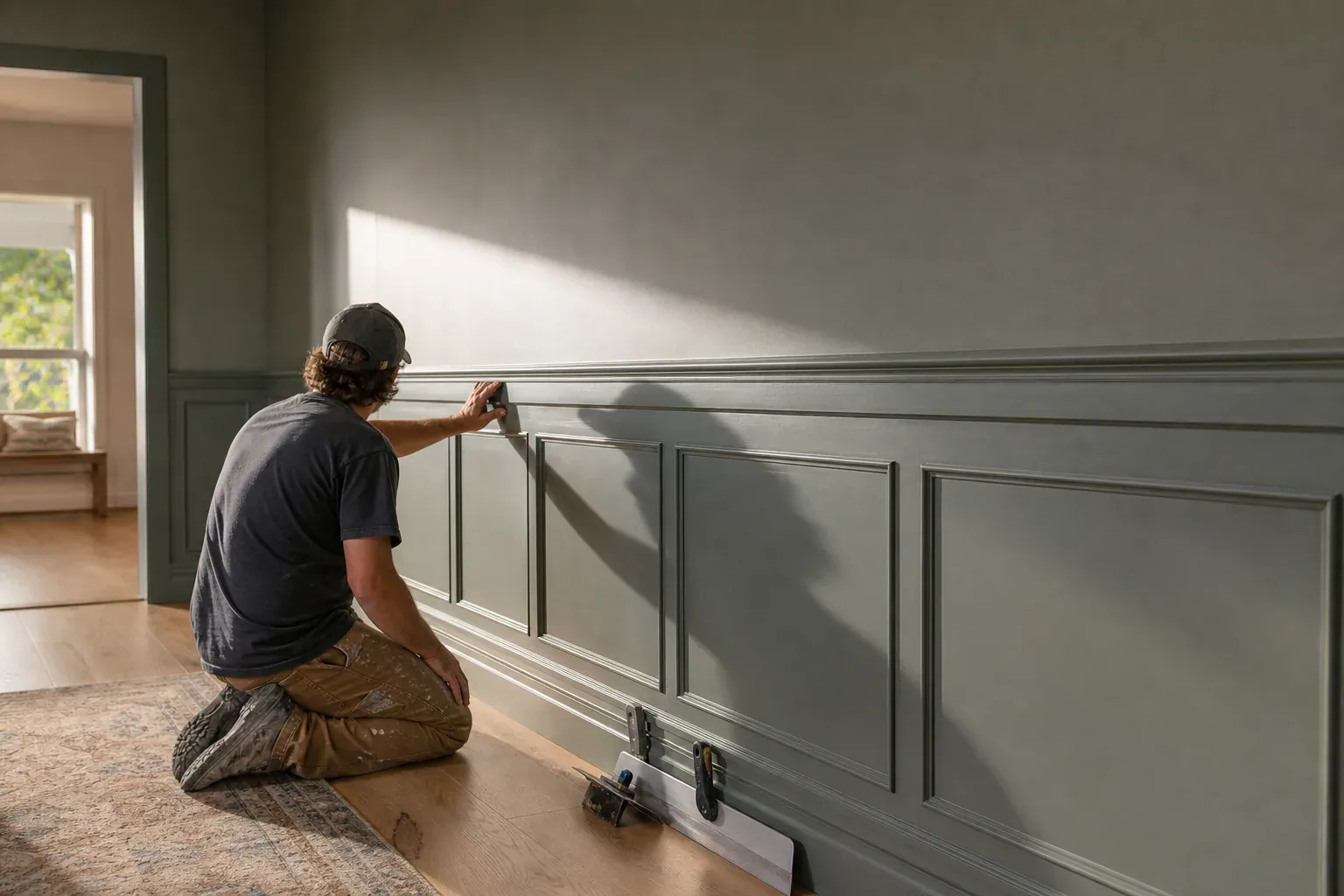
Professional drywall installation isn't simply screwing board to framing. Fastener spacing, joint reinforcement, and surface preparation determine whether a wall will hold paint smoothly or show ridges and bumps for years.
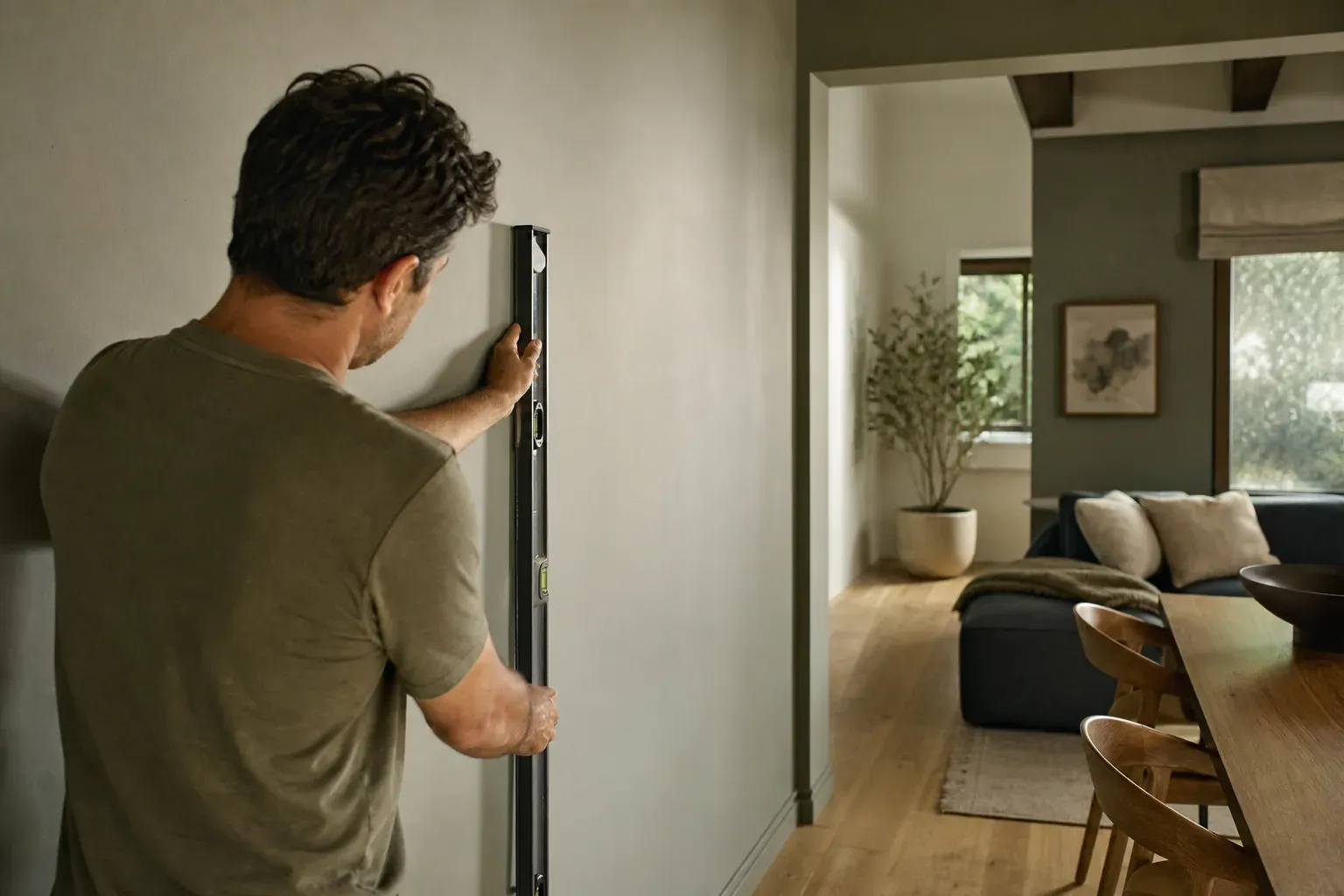
We inspect framing before hanging drywall—studs must be straight, spaced 16 inches on center, and free of warping. Drywall screws go every 12 inches along studs and 16 inches along top and bottom plates. Gypsum board comes in multiple thicknesses; we choose 5/8-inch for ceilings and 1/2-inch for walls unless fire-rating or sound isolation demands heavier gauge. Joint reinforcement—the drywall tape we embed in compound—runs along every seam. Corner bead protects the outside corner from damage and gives paint a crisp line.
A level 5 finish is perfectly smooth drywall, ready for flat paint or wallpaper. It requires five coats of joint compound applied with progressively wider taping knives—10 inches, then 12, then 14—to feather the edges so no ridge shows. We sand between coats with a sanding sponge on a pole to avoid dust clouds. Renovation work often demands texture matching: if your home has orange-peel or popcorn texture on the ceiling or walls, we sample the pattern, mix finishing texture to match, and apply it so the repair blends invisibly.
Ceiling damage from water intrusion or impact needs the same finishing discipline as walls. Popcorn ceiling removal involves spraying the acoustic ceiling with water to loosen the coating, scraping it carefully to avoid gouging the drywall substrate below, and sanding the remaining residue smooth. Once stripped, the ceiling can be left smooth, textured, or finished with acoustic ceiling tile if sound absorption is needed for apartments and multi-unit buildings common throughout Santa Monica.
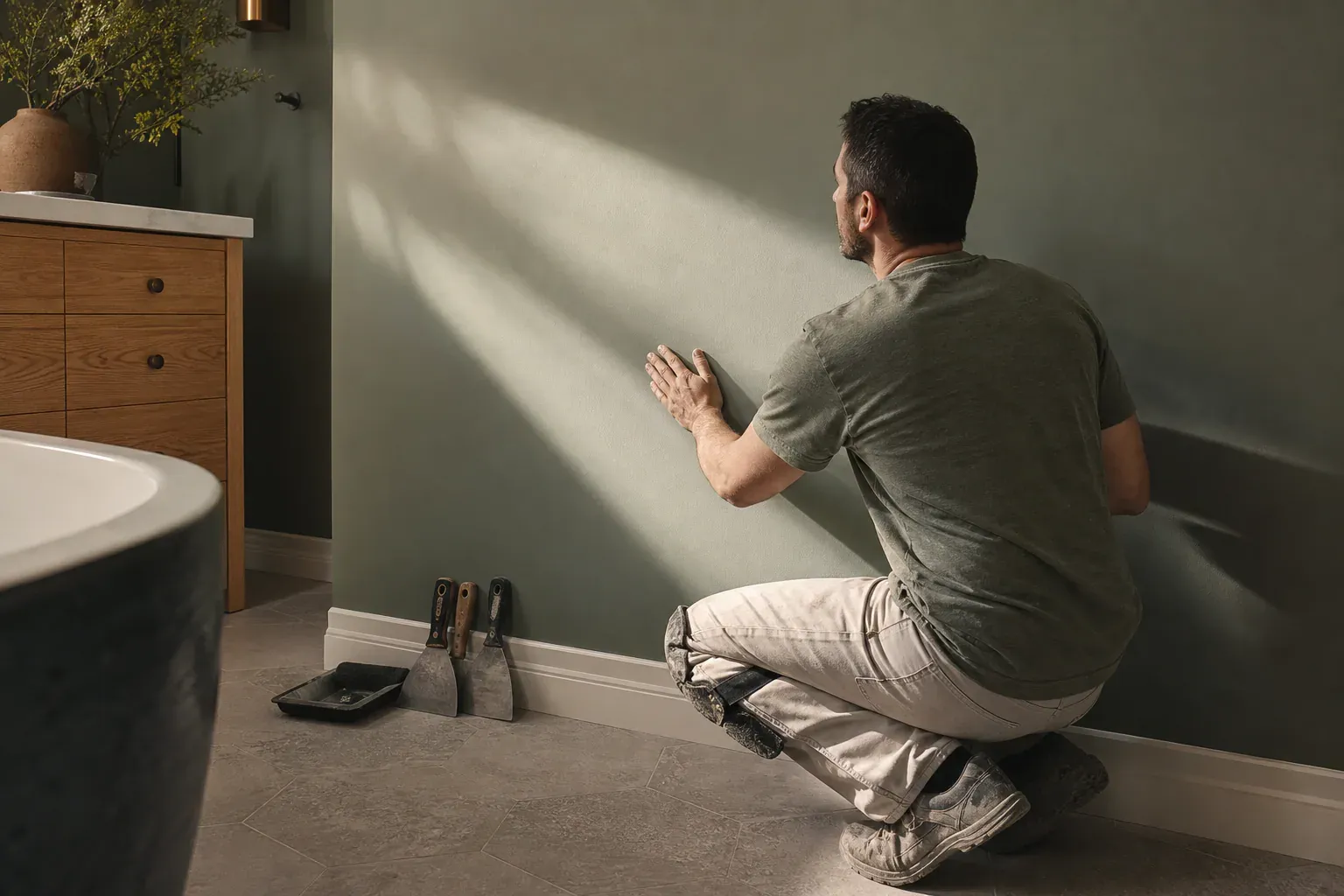
Living near the coast changes drywall durability. Salt air and moisture create conditions that standard materials struggle with.
Humidity from morning fog—May Gray and June Gloom are real here—cycles in and out of drywall, causing expansion and contraction that eventually pops fasteners. Properties in Santa Monica Canyon and near Palisades Park experience coastal moisture that accelerates rust on metal fasteners and studs. We address this by specifying mold-resistant drywall, using stainless steel fasteners, and installing moisture barriers behind new board. Standard drywall fails faster than it would in drier inland areas; planning for that reality extends wall life by years.
Heavy rain occasionally infiltrates older homes and newer construction with poor flashing. Water damage restoration after storms means documenting damage with photos and measurements, removing saturated drywall, allowing framing to dry completely, and installing new moisture-resistant board. We work with insurance adjusters and photograph every stage so your claim is supported by detail. Mold growth begins within 48 hours, so speed matters.
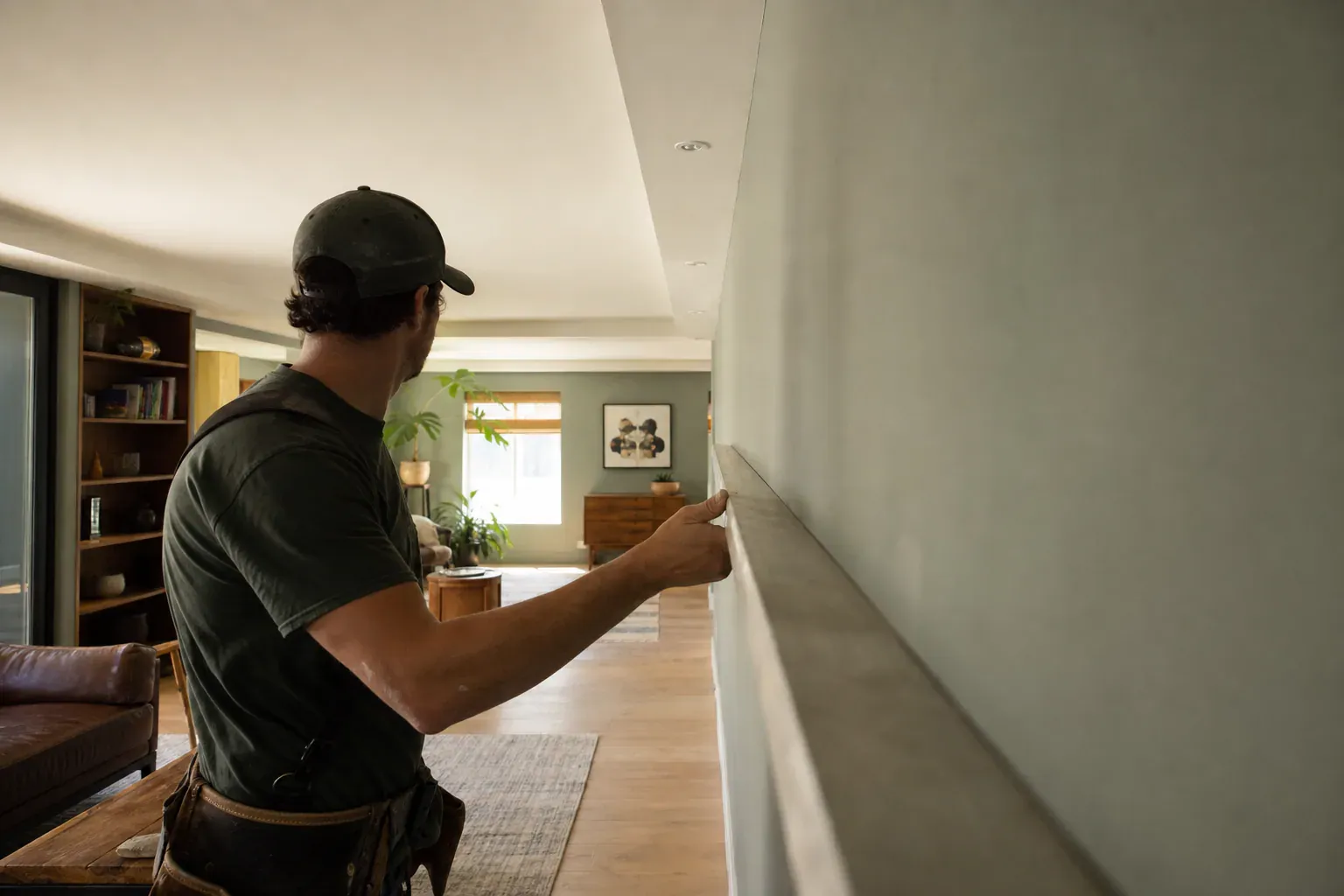
Office, retail, and hospitality properties need reliable, fast drywall work to minimize downtime. Restaurants near Colorado Avenue, corporate offices hosting media companies and entertainment firms, and retail spaces all benefit from crews who understand timelines and building codes.
Commercial spaces must meet fire-rating codes. Type X gypsum is thicker and contains a non-flammable core that resists flame spread. We install fire-resistant drywall in walls separating units, in common areas, and around mechanical chases where code requires it. Creative offices and mixed-use spaces across Santa Monica demand installations that pass inspection and protect occupants. Corner bead, fasteners, and joint compound must also be fire-rated in these applications.
Material choice affects durability, cost, and environmental impact. We source locally available options and explain the tradeoffs.
Type X gypsum board is standard for fire-rating. Type C is a specialty product with better moisture resistance than Type X alone. Both are available from regional suppliers. Mold-resistant drywall contains a paper facing treated to inhibit fungal growth—important for Santa Monica's salt-air and humidity cycles. We compare these options against project needs and budget. Specialty boards cost more upfront but last longer in coastal moisture, reducing future repair cost.
Recycled-content gypsum board and low-VOC joint compound reduce environmental impact for homeowners throughout Santa Monica and surrounding areas. Recycled gypsum performs identically to virgin material; the cost difference is minimal. Low-VOC compounds emit fewer volatile organic compounds during drying, improving indoor air quality. These materials perform as well as standard options while lowering the environmental footprint of your interior wall finishing project.
Apartments and multi-unit buildings in Santa Monica benefit from sound-isolation solutions. Double drywall layers with acoustic insulation between studs reduce noise transmission between units by 10–15 decibels. Sound-absorbing boards reduce noise within a room, useful for entertainment venues and properties where noise isolation is a priority and budget allows.
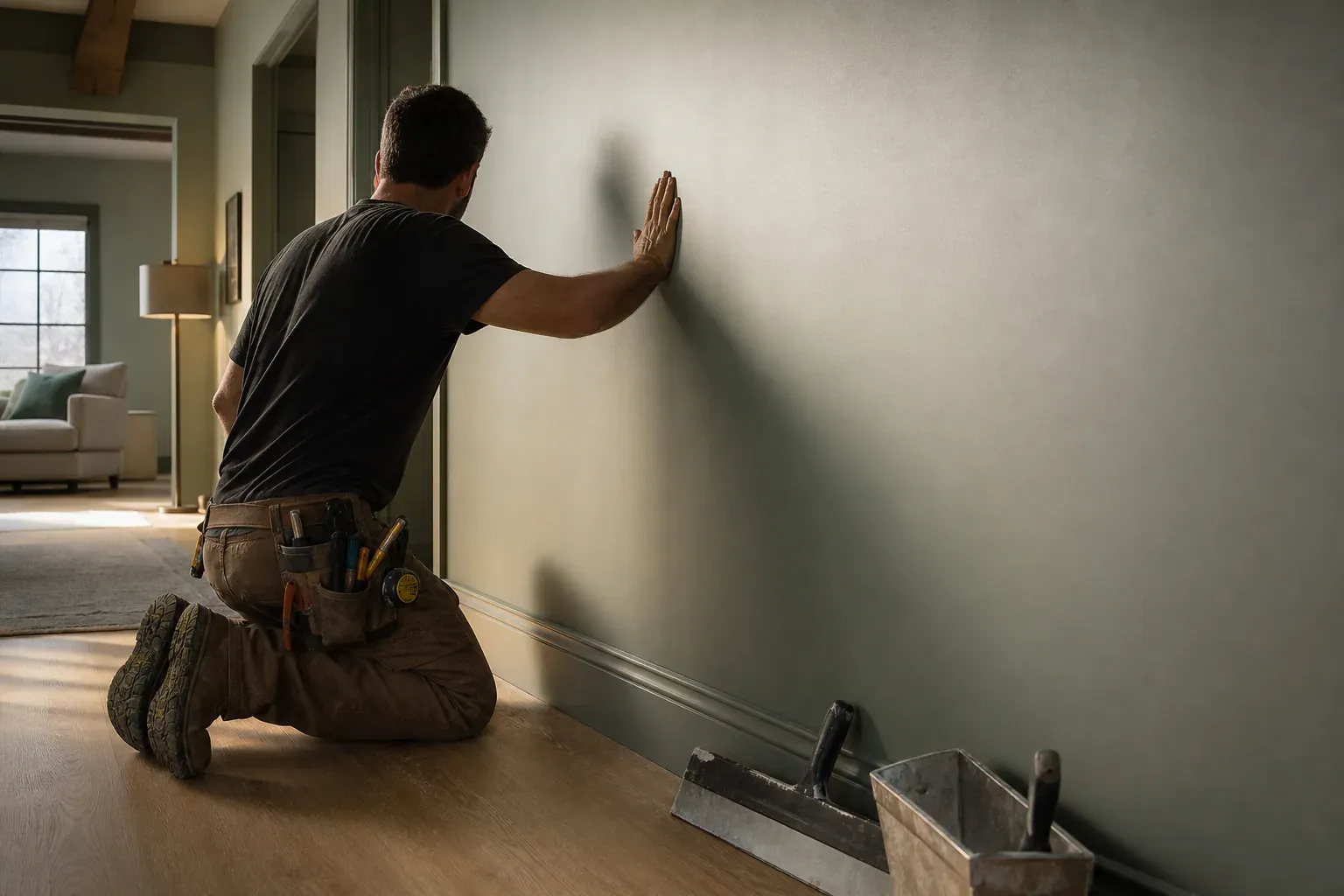
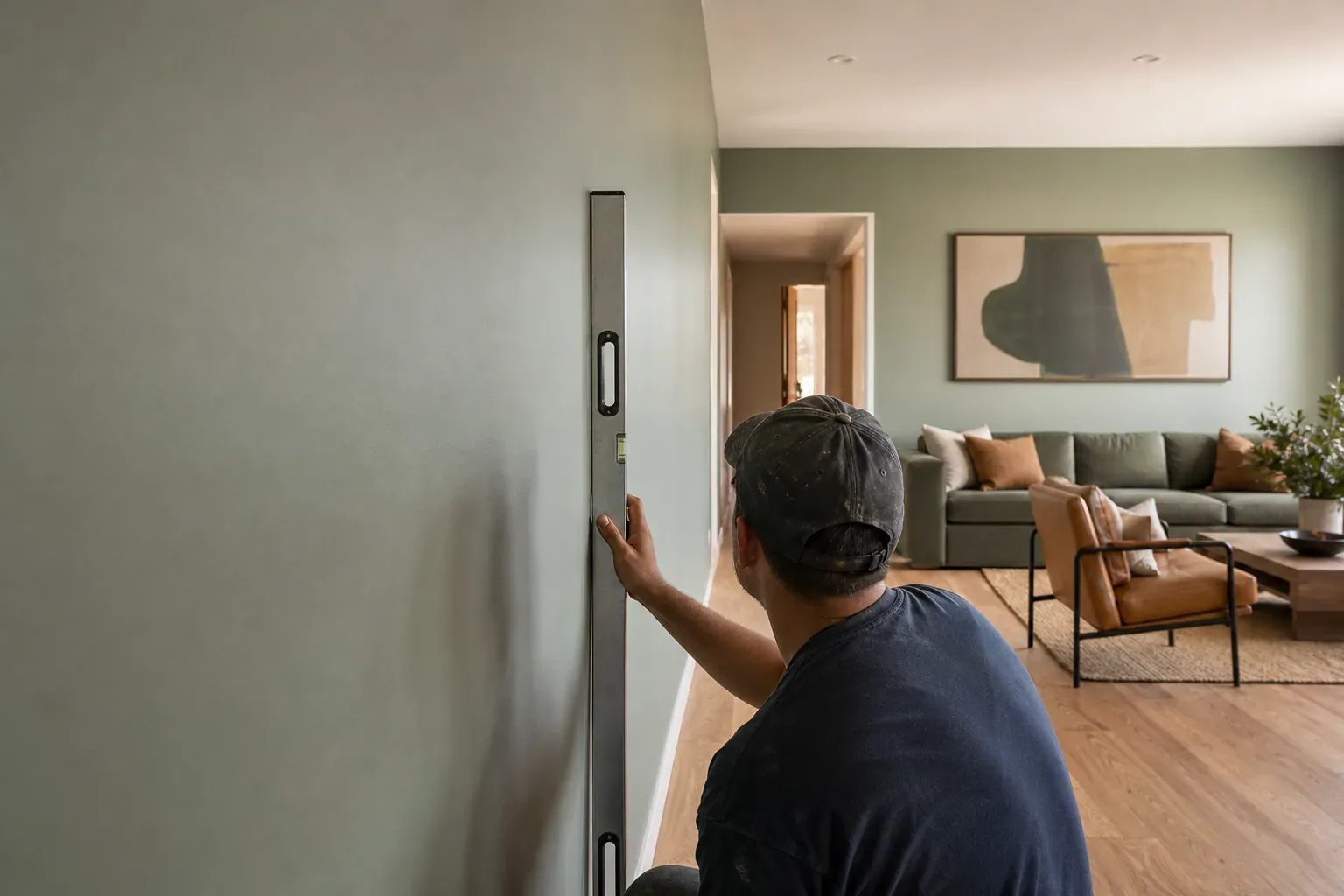
Cost depends on scope, material type, and finish level. We itemize pricing so you understand what drives the total.
Joint compound, corner bead, and drywall tape are inexpensive; labor is the largest cost. A simple patch of a few square feet costs less than full-wall installation. Material sourcing in Santa Monica is straightforward—suppliers serve the local market—but site access affects labor time. Steep hillside streets and tight parking in older neighborhoods throughout Santa Monica Canyon mean longer setup. Multiple coats of finishing texture cost more per square foot than level 5 finish because each coat takes time and material. We provide detailed estimates breaking labor, materials, and finishing level separately.
Red flags matter. Poor surface preparation—dust, loose tape, old paint not sanded—will show through new finish. Weak framing support causes nail pops within months. Improper finishing texture doesn't match existing walls. Ask contractors if they sand between coats and feather compound edges. Ask if they inspect framing before hanging. Ask for references on texture-matching work and water damage restoration. Crews who rush these steps save time but create callbacks.
Nail pops and anchor holes are the most frequent repairs we see. A nail pop happens when fasteners back out as framing wood dries, pushing a small bulge through the drywall finish.
Settlement cracks appear as straight lines running through joints or across field (the flat area between seams).
Coastal moisture and occasional storm runoff damage drywall faster here than inland. Water stains indicate past saturation; we cut out damaged sections and replace them with Type X gypsum…
We inspect framing before hanging drywall—studs must be straight, spaced 16 inches on center, and free of warping.
A level 5 finish is perfectly smooth drywall, ready for flat paint or wallpaper. It requires five coats of joint compound applied with progressively wider taping knives—10 inches, then 12,…
Ceiling damage from water intrusion or impact needs the same finishing discipline as walls. Popcorn ceiling removal involves spraying the acoustic ceiling with water to loosen the coating,…
Why homeowners call us
Every drywall job is scoped and priced in writing, so the number you approve is the number you pay. If something behind the wall changes the work, we stop and price it first.
You speak to the people doing the work, not a call centre, and cover certificates go to your building manager or general contractor on request.
Containment, floor protection and same-day debris removal on every interior job — the space stays usable while the work is going on.
Crews work Santa Monica and the surrounding cities every week, so a walkthrough is usually available within the same week you call.
FAQ
Fastener corrosion and salt-induced efflorescence on drywall surfaces are frequent. Water staining from humidity cycles and mold spots appear on walls and ceilings, especially in hillside properties. Salt air accelerates rust on metal studs and fasteners, weakening structural integrity. Type X and mold-resistant drywall with stainless fasteners last longer. Regular inspection for stains and discoloration catches damage early before spreading.
Simple patching—nail holes and small cracks—takes a few hours. Full drywall finishing with multiple coats of joint compound and sanding spans 3–5 days depending on square footage and number of coats. Texture matching and popcorn removal add 1–2 days. Water damage restoration including drying time runs 5–7 days. Crews work during business hours to minimize disruption; larger projects schedule in phases.
Minor damage—nail holes, hairline cracks under 2 inches, small water stains—gets patched. Deep gouges, large water-damaged areas, mold growth, and structural cracks need section removal and new board. Press the wall firmly; soft spots indicate moisture saturation requiring replacement, not patching. Sagging ceilings signal structural problems. When in doubt, have a contractor assess it; some damage looks minor but signals hidden moisture that spreads.
Call (213) 555-0110 and we will come out and price the work in writing.